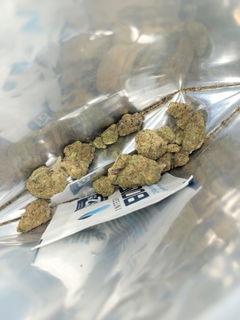
THCA Live Rosin in 2026 - The Solventless Gold Standard of the Concentrate World
In the year 2026 THCA Live Rosin is the item that people consistently find in the price heavy areas of stores and online lists. It is a lasting change in the business instead of a brief trend. For ten years makers have stopped using methods that pull out substances with harsh liquids. By picking this way of working, they make a substance that shows the plant as it is in nature. For a long time items that makers made with solvents were the most frequent things in the market for extracts - but people who buy those items now want them to be clean, to have open facts about how they are made and to possess tastes that come directly from the plant. Due to the needs, ways of working that do not use solvents have grown from a small niche to the main way that individuals measure quality. Looking at this shift, THCA Live Rosin represents the most advanced stage. It is what happens when people use plants that are in a state of high health and use techniques that require much training. And the increase in this product is also a result of new changes in the law. It is successful because of the rules in the 2018 Farm Bill. Under this law the government decides if hemp is legal - measuring the amount of Delta-9 THC that is inside the plant. To stay within the law, makers concentrate on raw cannabinoids like THCA - this allows those chemicals to be common in the market.
What Is THCA Live Rosin and Why Solventless Extraction Changes Everything
To analyze how this substance works, one must study every component of its title. "THCA" is Tetrahydrocannabinolic acid, which is the chemical that exists in raw cannabis before it becomes THC and it does not result in intoxication. When you apply heat to this acid, its molecular structure converts into Delta-9 THC. "Live" is the word for a concentrate that manufacturers make from cannabis plants which they freeze at a very low temperature immediately after the harvest. By employing this technique, they keep the complete variety of terpenes that typically evaporate when the plant undergoes the drying process. Due to those terpenes, the product has an odor and a flavor that are comparable to the living plant. "Rosin" is the term for the technique where the extractor removes oils without using any solvents. In this procedure, extractors use only heat and high pressure to separate oils from the cannabis trichomes. Because it does not involve chemical solvents like butane, propane or CO2, this specific technique characterizes the product. If a producer selects an extraction without solvents, they follow a particular set of rules. It is a method to make sure that the final product is a precise equivalent of the plant in its living state. There are no remaining solvents in the oil and this produces a substance that is free of contaminants and has a high degree of taste that is hard to reach with chemical extractions.
Live Rosin THCA vs. Live Resin - The One Difference Every Buyer Should Understand
In discussions about extracts with high levels of terpenes, people often confuse "Live Rosin" and "Live Resin" - but there is one important difference between those products because one contains chemical solvents and the other does not contain chemicals. To begin the process, producers use plant material that is high in quality and that they have frozen while it is fresh. On that account both products have scents that are strong and "live". When the production continues, the methods become very different. THCA Live Rosin is a choice for people who prefer methods that occur in nature. In this process the producer separates the heads of the trichomes - using machines, which often involves the use of ice water hash. By applying only heat and pressure, the producer forces the final oil out. It is a process where no solvents are present from the beginning to the end. In a different method, producers create Live Resin - using chemical solvents like butane (BHO) or propane - those chemicals move through the frozen plant material so that they can remove the cannabinoids and terpenes. Due to modern techniques, the removal of the chemicals is effective but the basic method is a wash with chemicals. For discerning buyers, this distinction is crucial. Choosing Live Rosin means selecting a product separated mechanically, while Live Resin relies on chemical extraction. There is a difference here that is like the difference between juice that workers press while it is cold and juice that is a concentrate. Both options are functional but only one is in a state that is raw and not changed by chemicals.
THCA Live Rosin Effects - What the Full-Spectrum Experience Actually Delivers
In the process of manufacturing THCA live rosin, the substance results in many different effects because of a biological mechanism that scientists define as the entourage effect. It is a theory where the multiple components of the cannabis plant, like cannabinoids, terpenes and flavonoids, interact to modify and increase how each part functions within the endocannabinoid system of the body. As individuals consume this material, the entire chemical profile of live rosin binds with CB1 & CB2 receptors plus other pathways in the nervous system. To compare this to products that consist of only single cannabinoids, this mechanism leads to a state that is high in intensity, includes many sensory responses and possesses a diverse set of characteristics. By applying this method, the result is a condition that is consistent with the specific chemical identity of the plant in its original state.
Why Live Rosin Effects Feel More Complete Than Distillate-Based Products
In numerous instances, the physical and mental responses to live rosin are broad in scope because the large amounts of secondary cannabinoids and terpenes alter the way that THC functions inside the human system. By comparison distillate creates a solitary outcome that lacks those internal adjustments. For the most part, distillate is composed almost entirely of THC, which functions as a powerful partial agonist for the CB1 receptor. Because of this specific chemical behavior, the substance can sometimes produce a state of awareness that is intense but uniform. Then again live rosin is made of many distinct molecules that function in a combined manner. To provide an instance, cannabinoids like CBG plus terpenes like caryophyllene connect with both CB1 & CB2 receptors. With the connections, the molecules adjust how THC attaches to receptors and transmits signals. Because those molecules work together, the strength of the THC is regulated. If this sequence happens, it can decrease the amount of worry and make the therapeutic but also sensory outcomes more varied. As demonstrated in studies by the NCBI/NIH, the ways that phytocannabinoids and terpenoids work together are required for the complete therapeutic outcome. And this specific type of cooperation is absent from items that consist of distillate.
How the Preserved Terpene Profile Shapes the Character of Every Session
In live rosin, the terpene profile is fully preserved and defines the overall experience, determining whether you feel relaxed, active, or focused through interaction with multiple receptor systems. It is necessary to understand that terpenes are not only fragrant substances but are molecules that have medicinal properties and produce specific biological outcomes. As an example Myrcene is a compound that induces sleep but also is able to increase the permeability of the blood brain barrier. As a consequence cannabinoids move through this barrier with greater efficiency. To modify mood Limonene interacts with the systems that regulate serotonin and dopamine. By contrast Beta caryophyllene is distinct because it functions as a cannabinoid as well as binds to the CB2 receptor, which is the component of the body that regulates inflammation. There is a complex relationship between various terpenes and cannabinoids or this interaction creates the specific "Indica" or "Sativa" characteristics of a strain. Because of this synergy, the product offers a specific effect that a distillate is not able to replicate.